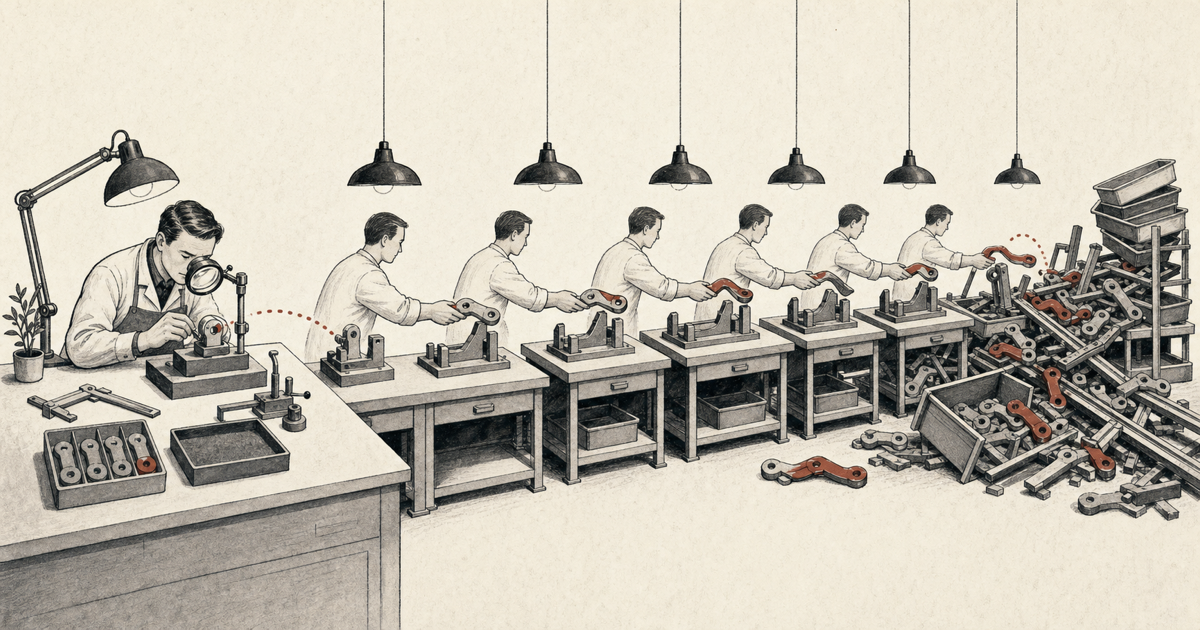
The pitch for multi-agent through 2024 and most of 2025 was simple: more agents, more capability. The pitch in 2026 should be different, because the data are in, and the data are not friendly to free-form coordination.
Three papers and one practitioner essay set the new floor. None of them killed multi-agent. All of them killed the version of multi-agent that ships well as a demo and badly as a production system.
The papers
MAST (Cemri, Pan, Yang et al., March 2025) is the first proper taxonomy of multi-agent failure modes. The authors measured seven open-source frameworks on standard benchmarks and reported failure rates between 41 and 86.7 percent. They cluster the failures into three buckets: specification issues, inter-agent misalignment, and task verification gaps. Inter-agent misalignment alone accounts for 36.9 percent of failures. The taxonomy is the most useful thing in the paper. The failure rates are the headline. [1]
The 17x Error Trap is the popular framing of a DeepMind study published in December 2025. Unstructured peer-to-peer networks amplified small reasoning errors by up to 17.2x over single-agent baselines on the same task. Hierarchical orchestration with a verifier kept amplification under 2x. Free-form collaboration did not. The mechanism is intuitive in hindsight. In a network where every agent both produces and consumes, a small bias gets re-cited as evidence, and the system convinces itself of its own error. [2]
Multi-Agent in Production 2026: What Actually Survived (Micheal Lanham) is the field survey that matters. Teams that shipped multi-agent in production had three architectural traits in common. A single orchestrator owned the plan. Message contracts read like API specs, with typed inputs and validated outputs. A verifier loop could fire a worker and force a retry. Nothing that looked like a Slack channel of debating agents survived contact with on-call rotations. [3]
The constructive read across all three: the architectures that worked in production look more like a CI pipeline than a faculty meeting.
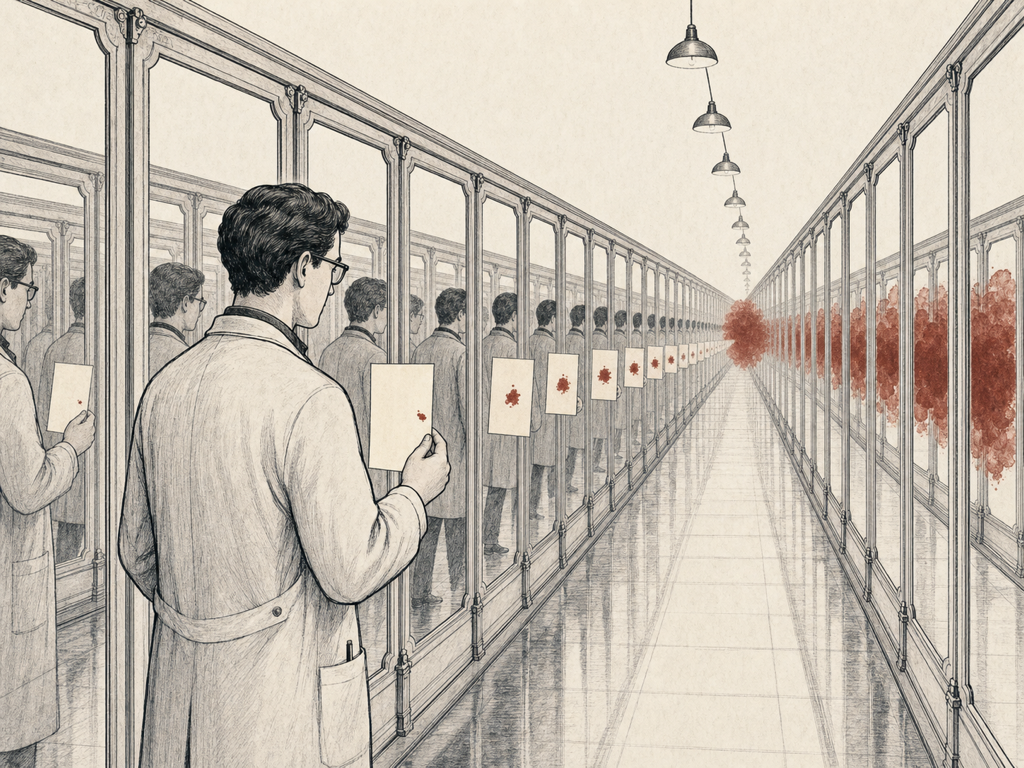
A small mark, re-cited as evidence by every reflection, becomes its own argument.
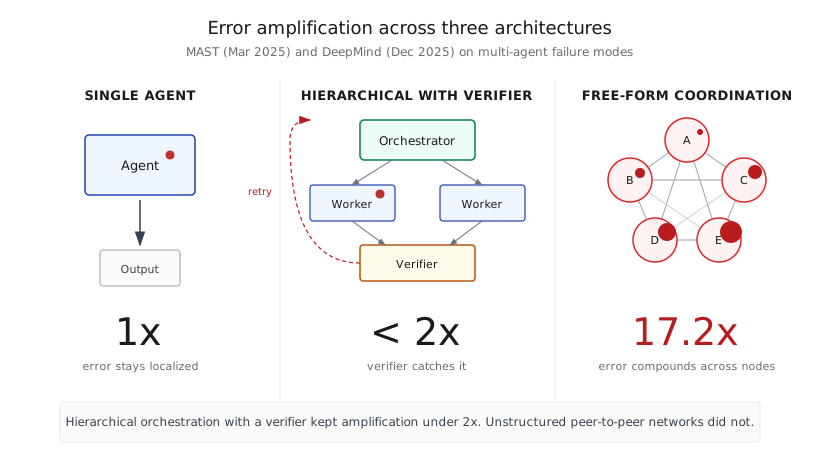
Error amplification across three architectures. MAST measured failure modes. DeepMind measured amplification ratios.
The bounded-agent test
Chapter 4 of the book frames the multi-agent decision around three questions. If a workload cannot answer “yes” to all three, do not reach for multi-agent.
- Decomposition is structural, not aspirational. The task has a clean partition that any reasonable engineer would draw the same way: retriever, reasoner, verifier; or planner, executor, critic. If two engineers draw the partition differently, you do not have a multi-agent system. You have an architectural disagreement dressed up as architecture.
- Each agent has an enforceable contract. Inputs are typed. Outputs are validated. A downstream agent will reject a malformed message without invoking the upstream agent’s reasoning. The MAST taxonomy calls the absence of this “inter-agent misalignment” and it is the largest single failure cluster they measured.
- There is a verifier that can fire a worker. The verifier is the bound on error compounding. Hierarchical orchestration with a verifier kept DeepMind’s amplification under 2x. Free-form coordination did not. The verifier is the difference between a multi-agent system and an expensive single-agent system with extra latency.
These three questions are the architectural floor. They are not the ceiling. A system that answers yes to all three can still fail in ways the three questions do not catch, particularly around cost and latency. But a system that answers no to any of them will almost certainly fail in production for the reasons MAST and DeepMind documented.
Where this fails
The bounded-agent test breaks on tasks where decomposition is genuinely emergent. Open-ended research synthesis is the canonical example. You do not know which sub-tasks the work decomposes into until you have done some of the work. Forcing a partition up front and locking it behind contracts produces a worse answer than a single capable agent with broad context.
The test also breaks when teams use multi-agent to compensate for context window limits. With 200K-token contexts widely available and prompt caching shipping across the major providers, the context excuse is gone for most enterprise workloads. If the only reason for splitting a task across agents is “the context is full,” buy a better cache. Not more orchestration.
The third failure mode is the most common in 2026. Teams adopt multi-agent for organisational reasons. Two teams own the work, so the system has two agents. That is a Conway’s Law artifact, not an architecture decision. It will look fine until someone asks where the verifier is.
In code
The pattern is implemented in src/ch04_multiagent/ in the companion repo:
contracts.py— typed message contracts between agents, addressing the second questionorchestrator.py— single-orchestrator pattern with a verifier loop, addressing the third questioncompare.py— single-agent versus multi-agent on the same task, with accuracy, cost, and latency reported side by side
Run python -m ch04_multiagent.compare to reproduce the comparison on the document-intelligence workload. The numbers move with model choice and seed. The shape is consistent with what MAST and DeepMind reported on much larger studies.
Free-form agent collaboration is the slowest known way to amplify a small error into a large one.